
Park County Arrest Warrants Explained
In Colorado, an arrest warrant comes from a judge, never from a private search service. Park County Court and District Court sit together as Park County Combined Court, part of the 11th Judicial District. The judge reads the case materials first. If the standard is met, arrest is authorized. The issuing court keeps control of that order until it is served, recalled, quashed, or otherwise closed. One caution about dockets: a hearing labeled "Appearance on Arrest Warrant" marks a scheduled proceeding, not proof that an active warrant stands today. For the exact route in a case, call the Combined Court clerk at 719-836-2940 or email parkcountyclerk@judicial.state.co.us. Staff handle procedural questions only. Legal advice must come from a Colorado-licensed attorney.
Park County Has No Public Warrant Database
Park County publishes no countywide warrant roster and no sheriff warrant-search portal. So start with the court named on the citation, notice, or docket. Not sure which court? The Sheriff's Office at 719-836-2494 or non-emergency dispatch at 719-836-4121 option 5 can route an agency question, though dispatch cannot recall a court order. Two state tools have real limits. CBI's public criminal-history search excludes warrants by design, and VINE tracks custody and release rather than every open warrant. A blank result in either system proves nothing about a Park County arrest warrant. The court's current file is the only sound verification point.
Inside a Park County Arrest Warrant
A Park County warrant file can hold many pieces. The order, complaint, and probable-cause material come early. Docket entries, bond papers, and the service return follow. A later recall or quash action closes the loop. What you can see varies with the case stage, sealing, juvenile status, investigation, and court policy.
| Case number | Connects the warrant event with the correct Register of Action. |
|---|---|
| Named subject | Requires identity checks beyond a shared name. |
| Issuing court | Controls status and future proceedings. |
| Charge | May appear in the complaint or information. |
| Status events | May include issuance, service, return, recall, or quash. |
| Bond | Must be confirmed from current case paperwork. |
Colorado Court Records and Park County
The Colorado Judicial docket orients a search by county, courthouse, party, and case details, but it is not a statewide warrant database. For documents, file the official record request form or contact Park County Combined Court directly. A strong request names the party, case number, case type, approximate date, and the specific record wanted, such as a Register of Action, complaint, disposition, or order. Clerks may restrict sealed, protected, juvenile, or suppressed material, and they may require identification. Colorado court policy and the Colorado Criminal Justice Records Act govern different parts of that access process. Ordinary county records follow a separate custodian route. For context on how Park County court routing works, the official jurisdiction overview lays it out.
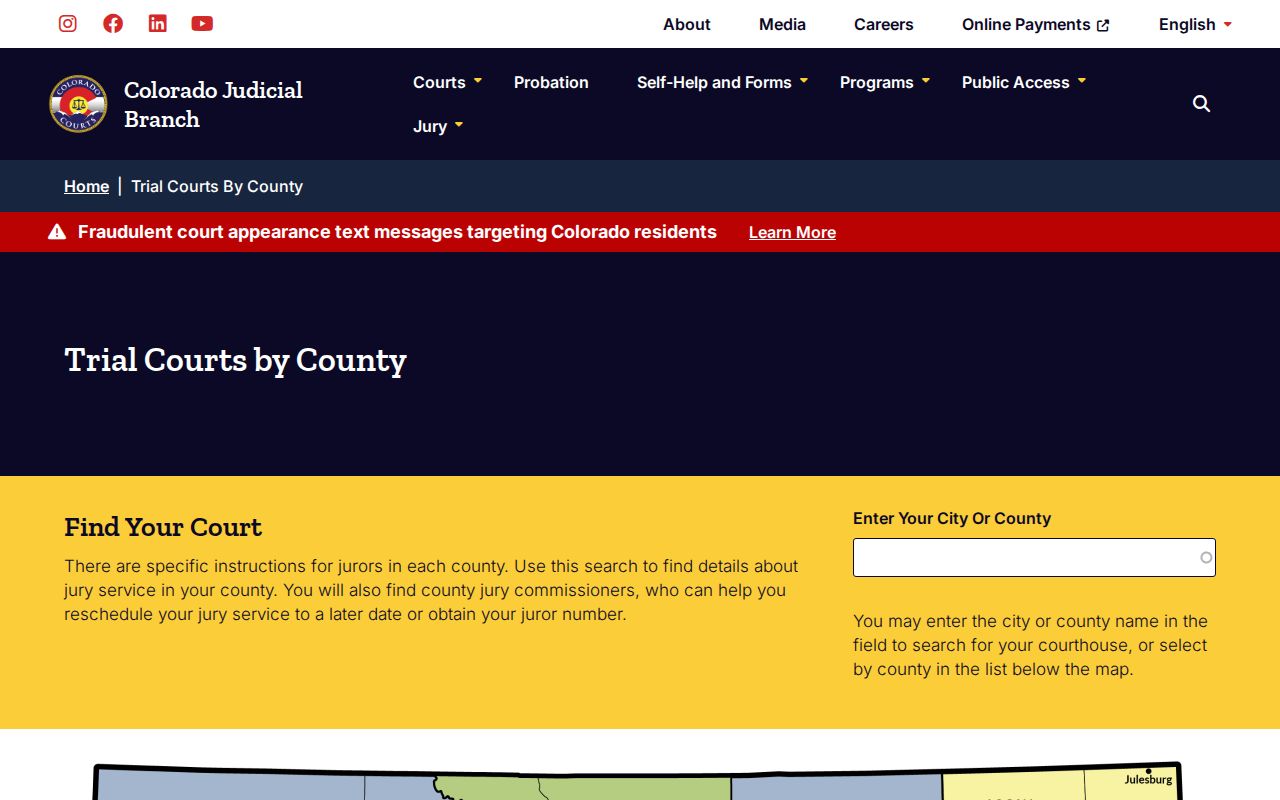
County, District, and municipal courts have different authority even when their local services overlap.
Serving Arrest Warrants in Park County
Any authorized law-enforcement officer can execute an active warrant. Countywide service falls to the Park County Sheriff's Office, while Fairplay Police covers Fairplay and Alma under the towns' partnership. Service can mean custody, booking, a court appearance, and a bond decision. On timing, the county's bond page sets hard rules. An arrestee must go before the court for bond setting as soon as practicable and no later than 48 hours after arrival, absent extraordinary circumstances. If release is granted, it should happen as soon as practicable and generally within six hours after the person is returned to or present at the jail. Electronic monitoring can extend that window in the circumstances the official page describes.
Park County Bond and Custody Roles
Each office answers a different question, so ask the right one. The Park County Jail at 719-836-4373 covers present custody, but it cannot certify that every court warrant has been found. Bond questions go to the bond desk, the sheriff, or the court. On money bonds, the county says only the bond amount is required to secure release, not booking fees or other debts. A $10 bond fee and a maximum 3.5 percent credit-card fee may still be charged as debt under the official explanation. A surety has a right to the bond paperwork and the next court date. None of these general rules predicts a case-specific amount or eligibility.
Comparing Arrest, Summons, and Bench Warrants
Read the exact document title. An arrest warrant, a summons, and a bench warrant are distinct orders in Park County, and the differences matter.
| Process | Function | Response |
|---|---|---|
| Arrest warrant | Authorizes arrest after judicial review. | Confirm with court and seek counsel. |
| Summons | Orders appearance without an immediate arrest command. | Appear on the stated date. |
| Bench warrant | Often follows nonappearance or noncompliance. | Ask the issuing court about recall procedure. |
The Park County bench warrant search explains the court-first route for a missed obligation.
Park County Reports Are Historical
Sheriff weekly activity reports list arrest dates, charges, release information, and bond details when they apply, but only for the reporting week. They are not an active warrant list. A past arrest does not prove a present warrant, and absence from a report proves nothing either. Verify current status with the court.
If There's an Arrest Warrant for You
First, identify the issuing court. Ask what record confirms current status, whether appearance is required, whether counsel may file, and whether bond is set. Park County publishes no general surrender protocol, so call before traveling. Ask where and when to go, what papers to bring, and whether a judge or bond process is available.
Important: Speak with a Colorado attorney before surrender, bond, or a motion to recall or quash, and confirm instructions with the issuing court.
After court action, get proof. A recall or quash order, minute order, new date, bond receipt, release paper, or disposition all work. Payment alone should not be assumed to end a warrant.
Park County Jurisdiction in Official Images
The Fairplay Municipal Court page shows how a Fairplay Police citation may route to either municipal court or Park County Combined Court.
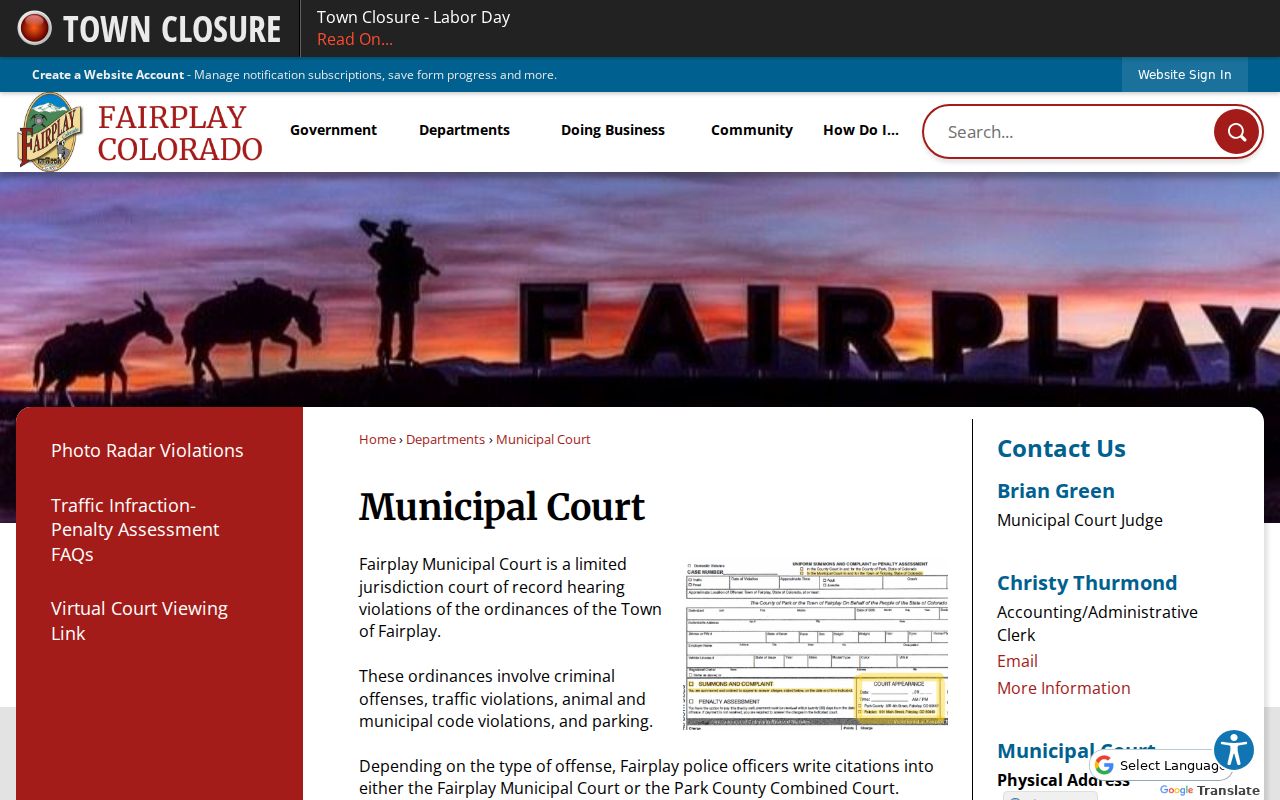
In Park County, the court named on the paper sets your next contact, and the Fairplay Police page documents shared local service.
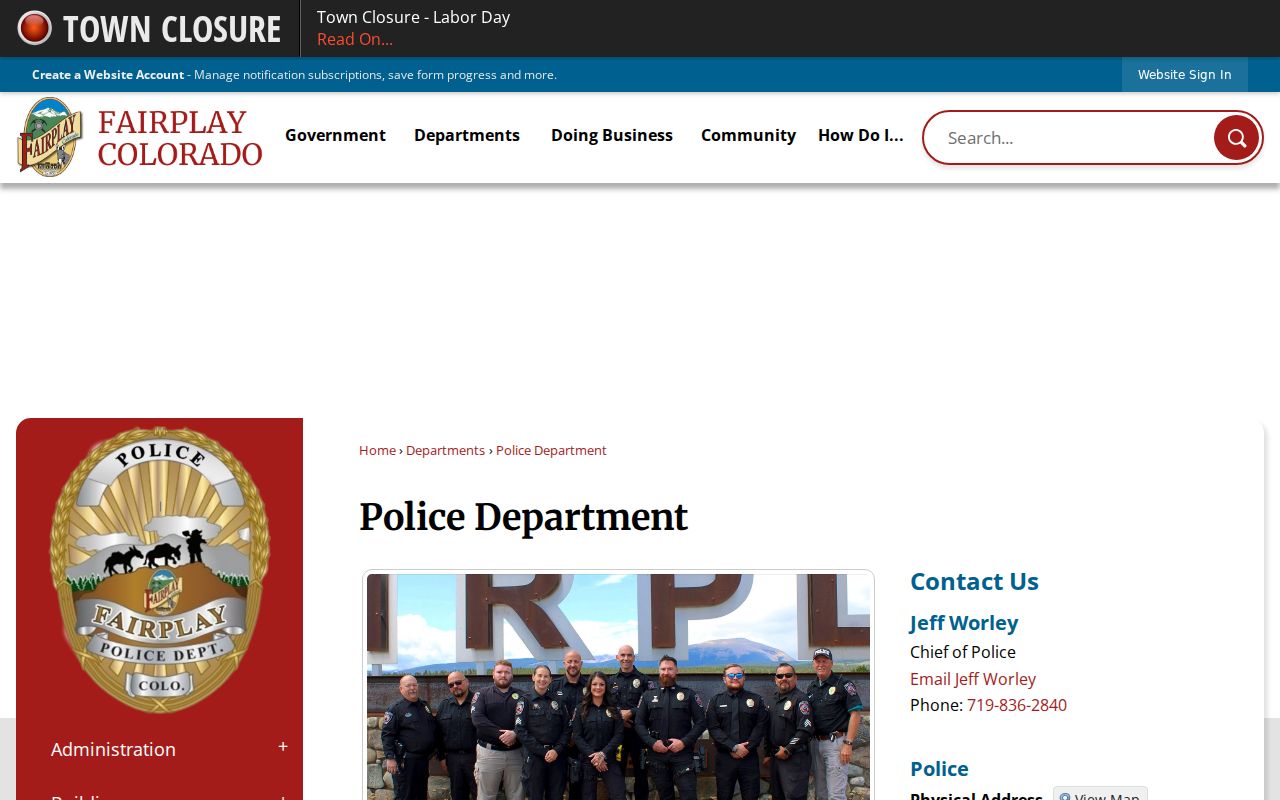
Shared policing in Park County does not merge all court records, and the official viewing page documents the shared sessions.
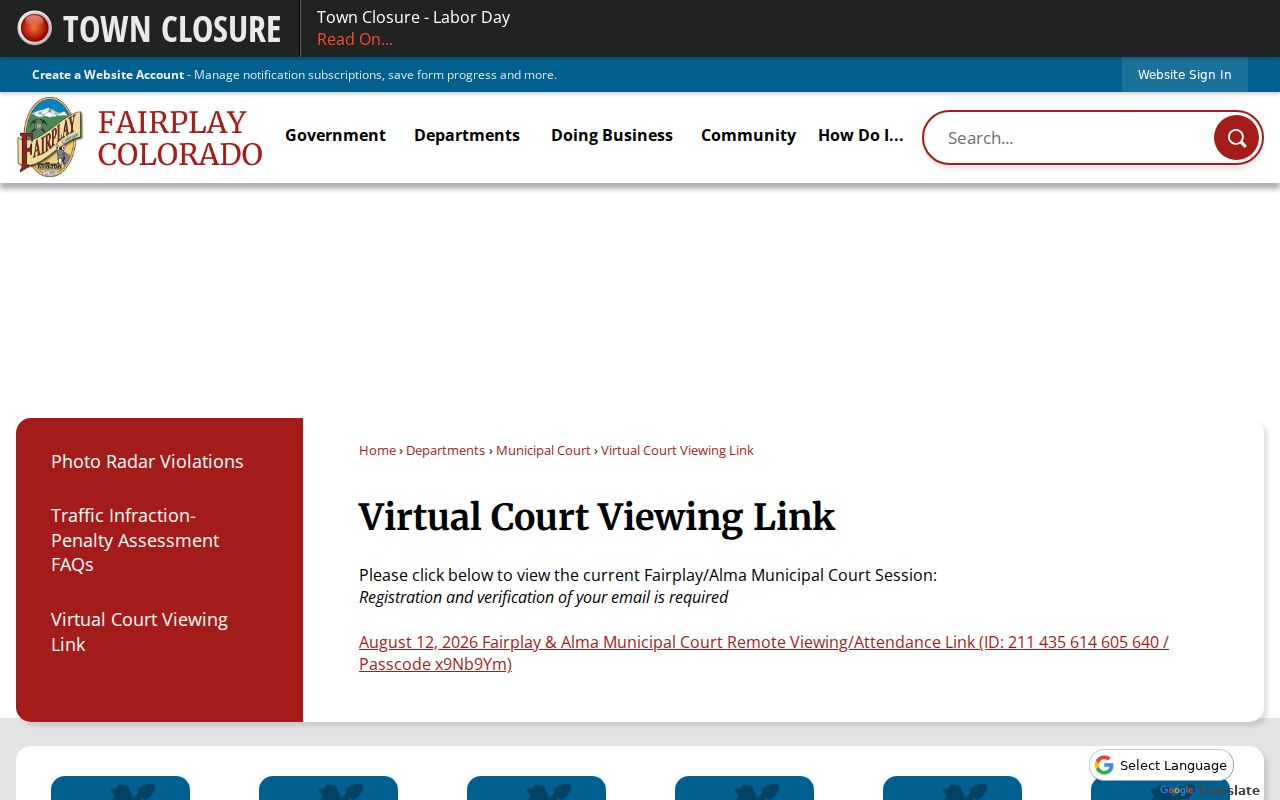
A viewing link is not a warrant-status search.
Park County Proof After Court Action
Get the outcome in writing. A phone update from the Combined Court clerk is useful for planning, but Park County paper proves more. Ask the clerk which document records the result, since it varies by case: a recall or quash order, a minute order, a Register of Action entry, a new hearing notice, a disposition, a bond receipt, or release papers. Keep whatever you receive, along with the date and the office that supplied it. A records request alone does not change a warrant, and a payment receipt may not show that a missed appearance was ever addressed. Only the issuing court can state what a document actually does. If the paper is restricted, ask the Park County clerk what public status can be granted and what identification you need to show. Where the answer touches surrender, liberty, bond, immigration, or another serious right, hand the papers to qualified counsel instead of guessing from a short docket label. Before you rely on the proof, check that the case number, court, party, and action date match the matter you discussed. If an officer or a jail record still shows an older entry, do not argue from a picture on your phone. Call the issuing clerk and your lawyer, describe the mismatch, and ask which certified or filed order should come through the proper channel. Keep every receipt and court notice together in Park County, because a clean paper trail separates the warrant decision itself from a bond release, a payment, or a later hearing. Those steps are related, but they are not always the same legal event.